Monday, May 3, 2010

Show and Tell: Powder Blue and Red Macaw

Show: The Childers


This is a classic version of "The Childers", a salmon fly invented around 1850 by one Colonel Childers. In its original version, the Childers is made up of what appears to be a mixture of LL Bean sweater colors and the short stories of JD Salinger:

"Tag: Silver twist and light blue silk.
Tail: A topping, strands of red and powder blue macaw, and pintail on top.
Butt: Black ostrich herl.
Body: Two turns of light yellow silk followed by light yellow seal's fur and three turns of scarlet seal's fur at the throat.
Ribs: Silver lace and silver oval tinsel.
Hackle: White furnace hackle dyed light yellow.
Throat: Scarlet hackle and widgeon.
Wing: Strands of tippet and tail of golden pheasant: brown mottled turkey, Amherst pheasant, pintail, bustard, summer duck (wood duck), green parrot, powder blue and red macaw, gallina (guinea fowl), mallard roof and a topping.
Horns: Blue macaw.
Cheeks: Chatterer.
Head: Black ostrich herl."

(source: the Classic Salmon Fly website)

Many other versions of the Childers have been developed over the years, including ones by Rizah Trokic:


and Martin Bach:


Is Bach's rashly neon body a legitimate advance? Is Trokic's innovative hackle arrangement a discovery, or only avant-garde posturing? "Even the masters of old tied flies with the same name in many different ways and who are we to say which way is best", say the legitimate enthusiasts.

Tell: Translation's Audience

Translation is, in some ways, the clearest and simplest version of literary mimesis: you are trying to write something that "looks like" something else that someone else has already written. In order to do this, it's important to consider constantly the conditions and predilections of your audience; but even a super-fastidious observance of these quantities is no guarantee of success. The fish either bites or it doesn't: there may be a certain amount of whimsy involved in its decision, even luck...though here, as usual, any superstition we allow ourselves must be true superstition, meaning highly pragmatic. You may not know why wearing your wife's bra around your neck lets you catch on average two more fish a day. But your knowing why is not the point. Or rather, "why" is a luxury that can be maintained only so long as it remains intimately connected to "how".

Translation is not a science, though it is filled with sciences. It is impressionistic and therefore vulnerable, circumstantial, ridiculous. At the same time, it is almost completely unrenumerative, meaning the closest thing to street ball that literature has right now. In its own unique, and I think endearingly naive way, it believes in what anyone with half a brain knows is impossible: the miraculous/mundane transubstantiation of foreign into native. Parasitic as a pilot fish, its poetics must therefore be deduced, as the sun deduces salt from seawater, which is slow of course, but which earns for the translator, after long effort, the paradoxical combination of crystalline hardness and a generous capacity to dissolve instantly in water or saliva.

Translation has not, surprisingly enough, been "figured out". There are memoirs, but no adequate manuals. Like China, travel writing, and certain types of concrete poetry, it is an art of perpetual arrival whose moment in the sun is always "on the horizon".

Wednesday, April 28, 2010

The End: a Paleontology


I. Petrified Metaphors

Ponder, if you will: no human being on earth, alive or dead, has ever seen a dinosaur.

In his fantastic exploration of millennial thought, The Sense of an Ending, British literary critic/experimental essayist Frank Kermode examines the concept of "spatialization" in literary criticism, first described by Joseph Frank. Frank's idea, roughly paraphrased by Kermode, seems to be that, while we read a book once "in time", we continue to experience it - through either memory or rereading - in space. Personally, I find this metaphor a little difficult to wrap my mind around (can time and space be isolated like that? Don't we always experience things in both time and space? Could I somehow interact with my living room in a way that doesn't require my moving through time as well? Could I spend an hour outside of space?). What seems crystal clear, however, is the qualifying aside that Kermode appends to it:

"Used in this way 'spatialization' is one of those metaphors which we tend to forget are metaphorical, like the metaphor of organic form." (p. 178)

For me this sentence sums up, among other things, the Novel, Russian literature, and What It Means to Be a Young Man. "One of those metaphors that we tend to forget are metaphorical". Say it with me - go ahead, don't be proud! After all, we're none of us so good at tracking squirrels or carving spoons out of larger spoons that we don't occasionally (read: all the time) treat our metaphors like a teenage boy lavishing backstory on his fake Canadian girlfriend. We're human: mixing up art and life is what we do, whether we're Jan Brady or a brainy Dostoevsky scholar.

II. Real Disasters

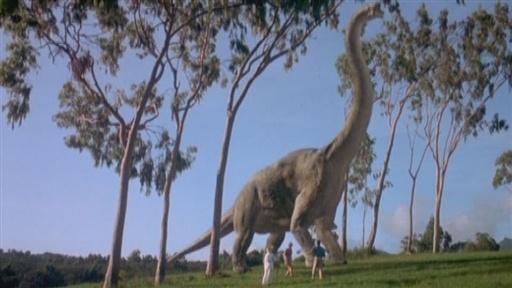
Dinosaurs are a perfect example of this. Who has ever seen a dinosaur? At the same time, who can forget the impact of Jurassic Park's introductory brontosauri? No amount of screen clippery can convey the impact this image had on me as a 13 year old; roughly paraphrased, my impressions were probably along the lines of "Holy crap: a real dinosaur!" And truly, this is the effect that Spielberg's expert technology shot at and achieved that long ago summer, for millions of people all over the world. A real dinosaur - meaning, a dinosaur that made the representations we'd been given in the past appear to be, not awe-inspiring and lifelike, but comical, ridiculous. Dinosaurs are not like that: they're like THIS, and thank god someone finally got them right! So the representation seemed to reach, not just back in time, but forward as well, rendering not only its ancestors, but its children obsolete as well.

In this way, the aesthetic implications of Jurassic Park were, as with all masterstrokes of mimesis, apocalyptic. In order to fully appreciate this, imagine an animator who had working on a dinosaur movie at a rival studio (Disney, for example) seeing those brontosauri for the first time: while the audience gasped, he was no doubt trying to decide which high-rise to throw himself off of - for really what's the point, after such mastery? Where can we possibly go? Hope shuts like an antennae-touched sphincter and the creative brain (which, after all, need hope to function) shrivels into something like dried fruit: something sustaining, in other words, and full of nutrients, but ultimately unsatisfying, like all desert foods.

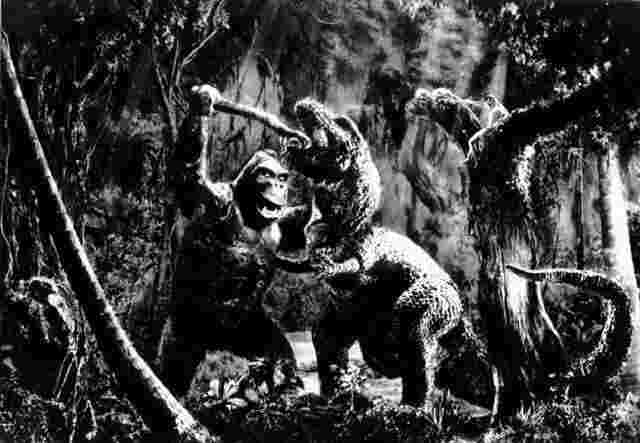
This feeling, of course, is completely normal: a mix of jealousy, dread and despair that anyone who has ever tried to create something new or at least original has experienced again and again. The history of art is a book of last days: just look at our own chapter if you want proof. Genres are dying, fundamental procedures being re-examined, hallowed formal and extra-formal procedures pushed back by forces that not even the most fervent fundamentalist believes they will be able to overcome. Innovators are heralded as precursors of Mayan-level apocalypses and hold-outs scorned with the cold gaze of opportunistic Bruckheimers peddling their personal 2012s (in which they have decided, despite the promising casting of John Cusack, to stick to the familiar Hollywood disaster-movie formula). Meanwhile, everyone is waiting for the little water glass on the dashboard to start trembling.

III. Last Boat to Kairos

The novel, named for its newness, is gloriously susceptible to these murmurs. As Kermode says:

"Any novel, however 'realistic', involves some degree of alienation from 'reality'. You can see the difficulty Fielding, for example, felt about this, at the very beginning of the serious novel; he felt he had to reject the Richardsonian method of novels by epistolary correspondences, although this made sure that in the midst of voluminous detail intended to ensure realism, everything became kairos [Kermode's appropriation of a Greek word concept of time that is about to end (as opposed to time unoppressed by, for example, a gigantic tidal wave)]."

Fielding debunked the vision of novelistic time that he found in the novel as it had been left to him by previous writers; so he invented a different way of putting things together that he felt was more realistic. The public agreed; but the important word to remember here is "invented". He was making it up. At the same time, the thing he made up appeared, to many people, to be a more accurate (or at least intriguing, beguiling, etc.) representation than what had come before it.

Was Fielding wrong to do this? Actually, Kermode says, he was, in his inventions, being far more the novelist than many of his more derivative contemporaries:

"In short, [Fielding] is, and would have been happy to hear it, of the family of Don Quixote, tilting with a hopeless chivalry against the dull windmills of time-bound reality. All novelists must do so; but it is important that the great ones retreat from reality less perfunctorily than the authors of novelettes and detective stories." (p.51 - and I would advise the reader concerned with the uniquely realistic mimesis of genre fiction to substitute here, for Kermode's somewhat unimaginative "novelettes and detective stories", whatever literature they find most generic)


IV. Hold on to Your Butts

To all those troubled by the coming End, I recommend a re-watching of Jurassic Park. As a meditation on novelty, the movie is endless: a formal and thematic mobius strip, in which the constantly-expressed mistrust of innovation is continually transforming into a delight at newness, or if not newness than at least technology, wittily adapted and charmingly executed (Spielberg's direction being an analogue here of Tom Cruise's smile: irresistible because impenetrable, and impenetrable, not because we can't find our way to the other side of it, but because we feel content to enjoy it as an end, however reduced). I find the velociraptors particularly heartening - for with their green eyes, hunched backs and withered little arms, they are so clearly caricatures that the question of how "real" they look becomes irrelevant, pedantic. Bugs Bunny wouldn't look like that, let alone walk on two legs, let alone talk. Yet he is a persuasive mimesis - if not of a rabbit pure and simple, then perhaps of something (or someone) "rabbity", or perhaps harelike. Animals are riddles - even dinosaurs. Applying them to our lives inevitably involves alterations, infidelities, as all translations do.

Art, like everything, is contextual, and just saying that once-revolutionary innovations now look stupid (or amazing) to us does not absolve us from acknowledging the newest New Thing, even if only by rejecting it. At the same time, my own experience of trying to make is that context can become overwhelming, and that, when this happens, it is helpful to remember that none of us succeed, not even the geniuses. The world goes on, or as A.R. Ammons (who, derivative-sounding when he appeared, has grown since his death into the most experimental American poet) writes:

"the anthology is the moving, changing definition of the
imaginative life of the people, the repository and the source,
genetic: the critic and teacher protect and reveal the source

and watch over the freedom of becomings there: the artist
stands freely into advancings: critics and teacher choose, shape,
and transmit: all three need the widest opening to chance

and possibility, as perceptions that might grow into currents
of mind can find their way; all three are complete men,
centralists and peripheralists who, making, move and stay:" (Sphere, p. 18)

Thursday, March 11, 2010

Fiction's Failure


I. Making Mistakes

The opposite of failure is success - but what's the opposite of a mistake? A success? And what is a success? The word belongs to that peculiar class of abstract English nouns we call "states", which you can travel into and out of without hassle or identification. But then you try to buy gas and the prices are different.

Mistakes, on the other hand, are local as furniture. They have no lexical antonym and are therefore free to roam through English unharassed. Their peculiar combination of flimsiness and power makes them interesting, unlike success - for success is the Velveeta cheese of human conditions: the same no matter where you slice it. All successful men are alike, to paraphrase Tolstoy. On the other hand, when a man tells us that he's made some mistakes, we want to know EXACTLY what they were.

"Everybody makes mistakes."

"Make one mistake and you're dead."

(Success may be something you achieve, but mistakes are made)

The most common uses of "mistake" imply recognition, which in turn point to two separate (-seeming) worldviews. Either 1) error is folded into life, which means success is a matter of overcoming one's errors, or 2) Success is achieved only through the strategic and near Herculian ability to avoid making mistakes.

"You had it all planned out - but you made one mistake" (sardonic, heavy-eyebrowed gangster-voice). In this sentence, as in the two quoted above, the sense of "downfall" is both heightened and strangely mitigated by the inherent domesticity of the "mistake" itself (which unpacks as something like "one little mistake"). The speaker is luxuriating, as choruses do, in the justice of the gods. The sentence creaks comfortably beneath him - for in the rumpus room of his thoughts, everything, even the juice stains on the carpet, contributes to a sense of ingenious inhabitation.

(and then isn't there also a sort of wonderful artistry about mistakes? Don't we appreciate them aesthetically - even when they're our own?)


II. Failure and Floating

To move into failure from this cozy realm is like being shot into deep space - for if mistakes are the most distinctive of nouns, then failure, I would argue, is the most nebulous. It's a "frozen verb": a linguistic/conceptual black hole ("frozen star" in Russian), whose location is fixed but whose axis pulses with mind-bending movement. Failure vibrates, like a fly on flypaper. It moves without moving. Next to the other "states" we occupy, it always seems to have been put into our box by mistake from some other puzzle.

Success is an endpoint, hence our dissatisfaction with its worldly version - for in achieving it, we inevitably discover that we have not achieved it. Being a failure on the other hand is like being stuck on one of the Snakes and Ladders snakes: you're not supposed to be there, but there's a luxuriant satisfaction in floating past the world's ankles with such impunity. You're moving. It's over, but it's not over - it is failure, which is similar to the pre-natal dream in that during it we feel both perfectly responsible and perfectly absolved. We are Jonah, delivered from the small whale of anxiety into the larger, more-predictable whale of God's will. This is the fall-as-rise of comedy - of Hrabal and Svevo and Flaubert and Tolstoy, among many others - which transfigures our inability to do what we want into precisely what God wanted all along.


III. The Mimic Plot

In fiction - from the hackneyed who-done-it to the lofty roman fleuve- the most persuasive mimesis of this transfiguration from mistake to failure to success is plot itself. What - you didn't see it coming? Well relax, and watch your anxiety transform alchemically into a faith that the confusing events of your life (which seemed so distinct at the time) really will, as James said, "hang together". Mistakes will turn out to be not just themselves, but part of some larger failure, which you couldn't see at the time you made them. Likewise this failure, so final-seeming when it fell, will turn out to be inside out.

This is why novels, as a genre, are so particularly powerful: not just because they contain mimeses (characters, settings, dialogue), but because they ARE mimeses. They're "graphs made up of graphs" as Guy Davenport puts it: collections of accurate particulars tilted against one another like dominos, so that the reader's attention might move through it Rube-Goldberg-style, losing - and yet somehow at the same time gaining - energy.

(So, when I hear people talk about difficult (read: "experimental") art pejoratively, I find myself strangely divided. On the one hand, I also hate art that lacks interest and attention. On the other hand, I feel that what these "traditionalists" are freqeuntly missing is the existence of this second-level mimesis. They want trees that look like trees: but the book itself looks like a tree)

A fictional plot, then, really is a sort of distilled failure: a strange-making, to use Shklovsky's phrase, which we live (..."in order to" wants to follow this somehow - but doesn't the Old Testament (that great book of plots) suggest the insignificance of a final clause? Order is in us, as we are in it. With a setup like that, there is no point in looking for a "point")

If the novel has a secret, particularly, it is how natural this plottedness is to it, and how, if we look back at the great novels of the past, we almost always find exactly what Sterne, Tolstoy, Shklovsky, Bolano say we're going to find. In saecula saeculorum, or as the KJB translates it, World without end. For how could we "succeed", in life or art? Likewise, how could a faithful mimesis fail to untie its own knots, no matter how convincingly it presented them? What would we think of its conscience?


IV. (close parenthesis)

(Finally, writing fiction, then, must be a matter both of being willing, and - MUCH more importantly - able to fail.

This is far more difficult than people realize)

Thursday, March 4, 2010

Rabbit or Duck?


Contemporary literature and visual art share a vague, background-level prejudice against/weakness for mimesis - that is, for works that blend, stick-insect-style, into the bewildering tree of the real. Personally, my view of this is Tolstoyan (in the novels, not the criticism) and therefore completely unrealistic: it's all a misunderstanding, a question of an original unity splitting itself through will and perversity into a series of schismatic offshoots, whereas if our wife was dying on the other side of the room we would find a way not just to forgive the lover that she had left us for, but actually to love him ourselves, and with all our hearts.

I mention this strange Russian garden of aesthetic peace because the British tradition of criticism, both literary and artistic, has always seemed to me to be fundamentally Tolstoyan. The desire is not to overcome an opponent's argument by amassing esoteric tautologies one on top of the other like a tower of spinning dishes, or to deconstruct relentlessly until everyone whimpers, but rather to ask, at every point, "What are we actually talking about here?" The appeal is twofold: towards "we" on the one hand (the shared reality of communication), and "what" on the other (the world under discussion). The overall tone is one of stern good will. It is all a misunderstanding, but we will make it through, you and I, these two men (women, children) of taste and understanding.


The sheer pleasantness, not to mention charm, of this kind of writing is obvious to anyone with an ear and heart; it's usefulness, unfortunately, is not. We want our aesthetics to be high tech and glistening, or folksy and hemp-smelling. Manners, we all agree, are boring.

They are not, of course: they are the heart of it, the backbone, the solution. We swim in manners. E.H. Gombrich's Art & Illusion even goes so far as to suggest that we are manners, or at least that any "original" act of seeing/reading is original only insofar as your decision to die your hair blue was original. It was, of course - but at the same time, it wasn't: it was a choice between existing possibilities, which you made either for or against the opinions of your peers - but still within the context of those opinions.

Multiply a choice like that times a thousand, Gombrich says, and you've got Van Gogh's decision to paint the skin in his self portrait using green paint. Was he painting from life? Or was he making his decision within a context of conventions so fine and expansive that spraying an aerosol can around his head would have revealed a veritable spider-web of ruby-red lines radiating out in every direction?


Freedom and meaning are incompatible: this is the tragedy of space and the reason why there will never be any great epics written by children who were raised by wolves - unless, of course, they are later taught by a French Catholic schoolmaster. Art is a continual process of debunking and rebunking, but in order to do either you've got to know, somehow, what you're doing. Not knowing leads to sterility and death, even if you manage to hit it once. So when you're out walking around town trying to see nature and dust and the soles of people's feet, take a copy of Whitman, or Rilke, or King, or something.

Gombrich's book is not just a history of art, but a plea for histories of art. If you want to know how to see better, it behoves you to learn how others saw in the past, and to think about the similarities and differences between their vision and yours. After doing this, you may be surprised to find that certain trends persist, for example, the desire to copy - to be, as Gombrich calls it, illusionist. You may find yourself either troubled or comforted by that, depending on how you fancy yourself.

Tuesday, March 2, 2010

More Please


Watching Shrek in Tehran is a four part Believer essay by author/teacher Brian T. Edwards that trades particulars for a gloss that I, at least, found smoggy and vague. In the first section, the Alborz mountains disappear "shade by shade into the ever-increasing fog", as Edwards's "smart and dynamic" Iranian interlocutor Nahad (whom the orientalist will no doubt imagine in dark sunglasses and a mini- skirt) describes the national love of Shrek: "You know," she says, "It's not really the original Shrek we love so much here. It's really the dubbing. It's really more the Iranian Shrek that interests us." In the second section, Edwards abandons Shrek in order to introduce the mysterious "Ali", a 35 mm. film collector, whose illicit lending and projection of western films has earned him the nickname "The Iranian Henry Langlois." The sixty year old Ali wears "a plad shirt under a worn tweed jacket." No pun intended. "Everybody knows Ali, but nobody knows where his archive is." In the third section, a brief filmography of the renowned Iranian filmmaker Abbas Kiarostami contrasts with a description of two articles about said filmmaker: a laudatory, if inadvertedly political one by Deborah Solomon (in the New York Times magazine), and a more rhetorically savvy, if still naive one by SUNY Buffallo's Jean Copjec. Finally, a fourth section manages to touch on the recent political unrest by quoting lengthily from a pair of Guardian articles by young gun Iranian filmmaker Mosen Makhmalbaf.

All of this leaves us wanting more about the whole Shrek-dubbing phenomenon, which surely deserves its own article/monograph/career. The translation of American movies is apparently growing into its own as an art form. Like the melody in a jazz song, or the text in one of Maurice Sendak's "picture books", the film itself becomes a set of constraints that the audio track then plays with and against. Local details (stereotypes, characters, political critiques) are grafted onto mythological stock (much the same way that the American Shreks harness fairy tale themes to, um, Mike Myers's Scottish accent).

------

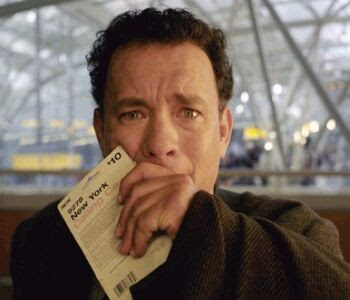
In Travelling Between Languages, the poet Chen Li asks "Is writing some kind of translation, travelling between languages"? More Hanks than Clooney, when it comes to air travel at least, he lingers in the terminals of his various poems like a short, nondescript man with dark sunglasses and a newspaper folded over his knee. That glow you feel radiating off of him is love: "Travelling in the family of poetry is the most substantial and warmest link on the lonesome journey in the universe," he says, which is sort of like what Mandelstam said. Actually, a lot of his poetry reads like Mandelstam to me, which would seem to be the most striking and improbable translation of all (except maybe not so improbable: after all, family members do tend to resemble one another...)

Thursday, February 11, 2010

Failure, or Why I Blog

My excitements about blogging are: immediacy, risk, invention and community. My worries are superficiality and failure. Especially failure, which I’m obsessed with and actually quite good at, especially on the internet.

Looking back, I find my success as a failure funny and even ironic – for like many great successes, I began my life hoping to pursue a completely different career than the one that has, apparently, become mine. The career I wanted to pursue was success; so, having heard that success is the opposite of failure, I set out to avoid failure at every turn. The resulting contortions – which cost me huge amounts of time and money, not to mention the respect of my peers and the love of those who had the gall to believe that really, failure was not such a terrible thing after all – were ridiculous and, I suspect, a little absurd: like trying to avoid the ground after you’ve jumped out of a plane. But when it comes to failure, I think I can say that I’ve succeeded, up to a point. Meaning of course that I’ve failed, at least at the success that I originally thought was my purpose and métier.

This may sound depressing to you; but the interesting thing is that accepting my failure has opened up many avenues of experience for me – at least as many as my attempts at success have shut down. For example, there is the diary that I have begun keeping ever since I realized that the chances of successfully getting anyone to hear or read about anything I did were slim, at best. At first, of course, I felt a slight twinge at having given up so easily on my dreams – at settling (as it is impossible not to feel that I have) for a less demanding, and therefore less glorious, and interesting medium. But then the truth is that, by keeping this diary of mine, I have really been following in the footsteps of previous failures the world over.

I will make a digression here, if you don’t mind – since I am apparently failing, once again, to keep on track – on the nature of diaries. Diaries have dangled for centuries from the foreheads of certain intense and observant young persons, as they walked down their streets or through their woods. Many times, these persons were simply trying to make themselves feel like less of a failure – but many other times, this attempt to make themselves feel less like a failure went hand in hand with the intuition that, even if they themselves were a failure, the world was not. In this, I find my own attitude in line with the classic diarists – for to me, the world is a success, meaning, so far as I can see, that a walk through the world, on any given day, can yield the kind of great lines and slow bits and effects that make you suck in your breath or grab yourself inappropriately that a successful poem, or novel, or movie does. If the diarist experiences enough of these moments, he or she might, after a while, decide that they are worth holding under other people’s noses. So said diarist might attempt, not to succeed, necessarily, but to report the world’s successes – which effort (the diarist’s, I mean) would look a lot like success, so long as the observer was not standing more than a few feet away from it.

In closing, I will say that of course, in keeping this diary I have also been somewhat of a hypocrite, since I’ve been trying to make a success of it, and so escape my fate as a failure. Will I do it? I pretend despair, but no matter how thoroughly I pretend, there is always hope. I hope, meaning that I think that the world I live in would be interesting to other men. More importantly, I think that the world I live in would be interesting to me – or rather more interesting – if I looked at it, not just as a success, but as a success that requires my participation in order to succeed. This is my hope, anyway, and the reason why, at the end of the day, I have failed even at failure, which I have heard described as “that most exacting of arts”.